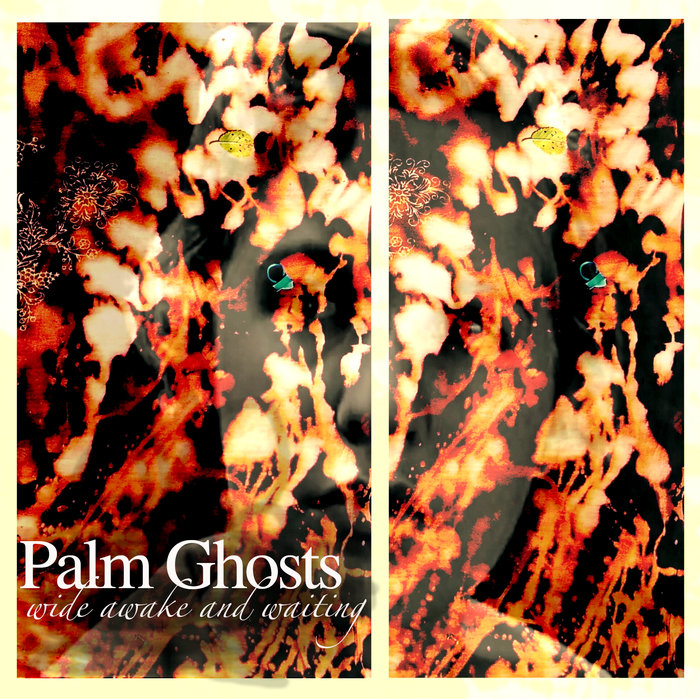
Palm Ghosts – “Wide Awake and Waiting” (Official Video)

There’s a tricky balance to achieve when wearing your influences on your sleeve. Lean too far one way and you’ll find yourself cast as an unoriginal take on well tred territory but too far the other way may result in being shrugged off as not-as-good-as when the originator did the thing you love. The latest from Palm Ghosts finds the band walking that razor wire and finding just the right balance of instantly familiar yet notably original.

Just a few moments into “Wide Awake And Waiting” and you’ll be reminded of the likes of Joy Division, Bauhaus or The Jesus and Mary Chain (of which they have a highly enjoyable cover). While plenty of music has space-y guitars, melodic bass lines and forelorn baritone vocals, it’s hard not to instantly make the comparison when all three are presented at once. Fortunately, there’s not a lot of music being made in 2020 within this genre, so it’s instantly a highly repeatable treat to have new music incubated from a period some 30-years old.

The accompanying video is an appropriately black-and-white affair filled with glitching static transitions between a mind-numbing variety of scenes that include stop motion nature, people and places from another time, artistic squibbles, cells and even the occasional haunting specter. If you encountered this being projected at a high class art gallery, you’d sit and stare for a spell, no doubt. There’s a very subtle transition near the end that begins to incorporate color footage, hinting either at a future sequel to this piece or simply a metaphorical emergence from the darkness. Either way, we’re in.

Palm Ghosts have been crafting post-punk, shoegaze, quasi-goth style tracks since as far back as 2014 and it’s quite evident that they’ve refined their techniques quite sharply here in 2020.

180: Putting Quarters in the Machine with Jonie

For some time now, I’ve wanted to interview producer, musician, podcaster and DIY supporter Jonie. His musical output both directly and as a producer has fascinated me and the release of his latest single “All the Time” (and subsequent EP, due Jan 27th) was a great excuse to finally get together and chat about all the things.

We manage to discuss Jonie’s relationship with Nashville, its blossoming Pop scene, his history with the, sadly, defunct OOKO Studios and the identity crisis that led him to create the wonderful Yadee Yadah podcast. He also talks about his musical creation process and drops a small bomb on us about an imminent relocation to the City of Angels but we ain’t mad about it.

Jonie will celebrate the release of his latest EP over at Tempo Coffee on Nolensville Rd on January 18th with Patzy. Tickets are available now.

More from JONIE:
Official Site: jonie.info
Instagram: @jonie_jonie_jonie
Twitter: @jonietapes

Follow us or submit your music:
Facebook: /weownthistown
Twitter: @weownthistown
Instagram: @weownthistown

Jonie – “All the Time”

“Main Theme” by Upright T-Rex Music

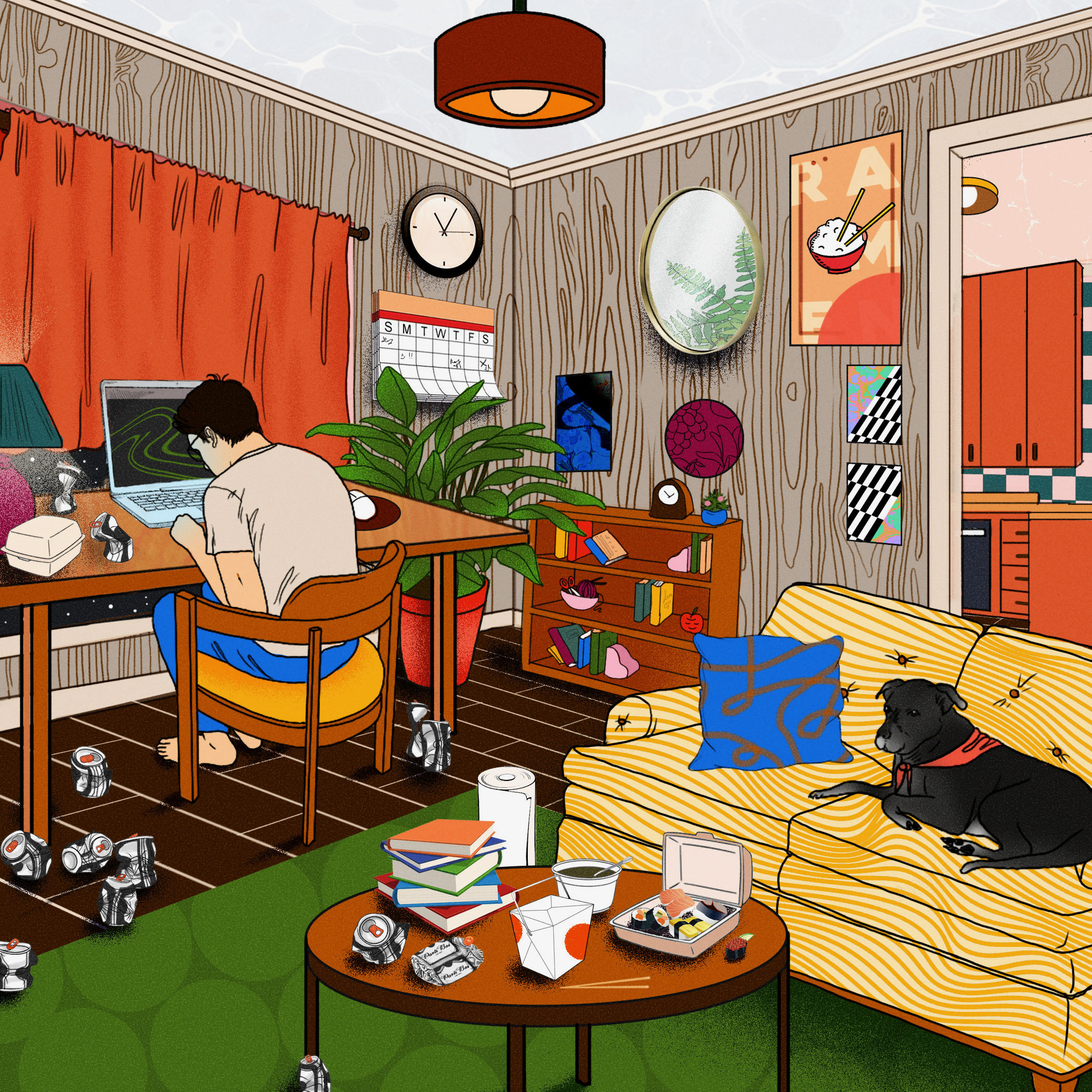
Cover Image: Jonie by Grant Ivie.

Jonie – “All the Time”

Back in November 2019, Jonie reset all his social accounts and started promoting a new EP on the horizon for January 2020. The producer / alt-pop musician has made good on that promise by releasing the first of the three tracks in the form of “All the Time,” now streaming on all the obvious platforms with the second two songs coming at the end of the month.

There’s plenty to say about the blossoming Nashville Pop Scene (much of which is far better articulated by several articles over at The Scene) but I’d surmise that Jonie sits on the fringes of that scene. As exemplified by this newest track, he composes highly infectious tracks filled with joyous samples and danceable beats in a manner that you would completely expect from a “Pop” artist but he subverts that backdrop with a vocal track cut with sincere melancholy, both lyrically and melodically. Surprisingly, this functions as a means of empowering the tracks emotional impact, rather than detracting from the feel good feeling.

Jonie has had a steady stream of singles trickling out since 2017 but a more cohesive grouping of them has been rare; if not non-existent. “All the Time” is just the first peek at a more cohesive whole to be released before the end of the month and I, for one, couldn’t be more excited to hear how they all work together.

The EP release will be celebrated over at Tempo Coffee on Nolensville Road on January 18th with Patzy. Tickets are available now.

Sean Nelson is Back in Nashville, Everybody!

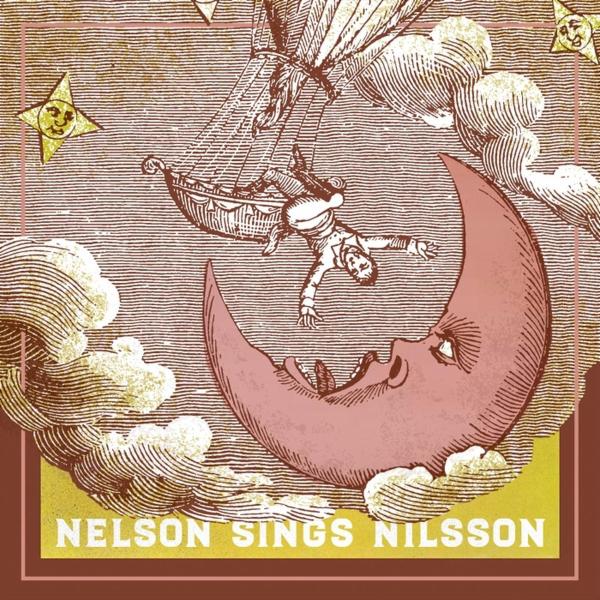
Sean Nelson is a writer / music journalist / haver-of-opinions / singer / musician. He wrote for The Stranger forever and ever and talked to some of the very coolest people along the way. If you don’t know his writing, you probably recall that he once exclaimed that he’d like to publish zines / rage against machines whilst singing in the band Harvey Danger. He recently released Nelson Sings Nilsson and it is so fucking wonderful that you should cut the shit and listen to it right now. We talked about writing and Nashville and the nineteen nineties.

More from Sean Nelson
Instagram: @actualseannelson
Twitter: @seantroversy
Facebook: /SeanNelsonMusicPage
And find his music on Spotify or wherever you stream music.

More on Nashville Demystified
Official Site: nashvilledemystified.com
Instagram: @nashvilledemystified
Twitter: @NDemystified

Brought to you by Knack Factory

Paul Thomas Anderson: The Master

In episode six of Filmography Club, our discussion and inspection on Paul Thomas Anderson’s body of work continues. As we move sequentially through his releases we now come to the post-WWII psychological drama The Master. The 2012 film depicts Joaquin Phoenix as discharged military serviceman Freddie Quell and his encounters with enlightened guru Lancaster Dodd, played by Phillip Seymour Hoffman. The narrative of the film contains many curious overlaps with that of Scientology, the sci-fi-gone-religion from L. Ron Hubbard, but Anderson and many cast members have refuted any direct parallels; likely as a precaution against legal recourse.

To discuss this dense film, host Jason Caviness is joined by Becky Delius; a well-read, erudite, clever commentator on many topics including cults and faux religions. They dive right in to their conversation on PTA’s psychological character study that is, ultimately, a “nihilist exploration on the futility of being a human being.” A dark synopsis but one that leaves lots of room to discuss character arcs or lack thereof.

More on Becky Delius:
Tumblr: @blackcatbelle
Instagram: @blackcatbelle
Twitter: /@black_cat_belle

Follow Filmography Club on Instagram @filmography_club_podcast.

Music by Uncle Skeleton

Freak Daddy – “Understand (How Bout No) [The DM Song]”

“Hi, do you send nudes?” is a helluva way to start a conversation but, sadly, probably not an altogether rare one for anyone using a social network capable of Direct Messages. Local EDM and Pop artist Freak Daddy recently encountered this exact conversation (coupled with an additionally disparaging follow-up) but decided to make something great out of this overstepping, rude and downright facepalming human behavior.

Understand (How Bout No)” is the full-fledged track and music video based on a prior TikTok video calling out the DM sendee. The video is set in Freak Daddy’s hotel room with some ridiculous dance moves and direct-to-camera mugging, coupled with footage from a recent photo shoot with Jess Williams. Everything about the offering is filled with levity, unbridled optimism and a confidently defiant message – a sort of rallying anthem for the denial of such lurid behavior. The chorus asks “why do humans still do this?” – a question that is unfortunately impossible to answer but at least Freak Daddy provides a means to empower those that are subject to these requests.

Until recently, I was among the uninitiated to the works of Freak Daddy but this song served as a fantastic gateway to several other catchy tunes done in a wide variety of styles and an Instagram account and podcast (Impurity) that regularly speak on topics generally seen as taboo in the South (i.e. gender identity, atheism, mental health). In this case, ignorance was certainly not bliss.

179: Empower and Educate

Our first episode back in 2020 finds us continuing to explore the depths of musical variety emerging from Nashville. As usual, we find an impressive array of genres and styles that far exceed the stereotype of the city. It’s not surprising but it’s always refreshing.

As always, be sure to check out more from every artist as these songs are just the tip of iceberg in terms of maximizing your enjoyment. Point your browsers to Soy Milk Boy, Lawndry, Devon Gilfillian, Freak Daddy, Elon Musk and Concurrence to learn more and tap on the album art below to hear more music.

Follow us or submit your music:
Facebook: /weownthistown
Twitter: @weownthistown
Instagram: @weownthistown

Soy Milk Boy – “Puke”

Lawndry – “More Than Any Other”

Devon Gilfillian – “Unchained”

Freak Daddy – “Understand (How Bout No) [The DM Song] [Explicit]”

Elon Musk – “Magnolia Moon”

Concurrence – “Endgame”

“Main Theme” by Upright T-Rex Music

Cover Image: Freak Daddy.

sugar sk*-*lls – explicit ethical agent

For the unfamiliar, sugar sk*-*lls is the moniker of Ben Marcantel, an electronic musician that has been creating a slew of music since 2010’s release Another Michael Mann Film. He’s collaborated with Matt Glassmeyer (Meadownoise) and Lindsey John (NUDITY) on his track “Tethers“, as well as Coupler and Lylas on “Right Hand Hand“, not to mention the slew of original compositions along the way. Stylistically, he’s likely most known for making work that falls somewhere in the chiptune arena but this classification has become woefully inaccurate over the past few years as he explores new instrumentation, implementation and experimentation.

The latest release, explicit ethical agent, not only pushes the envelope of styles Sugar Sk*-*lls participates in, it poses much larger questions about the creative process and the intrinsic nature of the decision making process.

That all sounds very heady, I know, but knowing a little background on the album helps to simplify and clarify the inquiry. In mid 2018, Marcantel starting playing around with Google’s Magenta AI for Musicians, a set of tools that generates a composition based a combination of rules derived from 10,000 classical recordings and an input from the user. Sugar Skulls input a single chord of his choosing, received a generated composition from the AI and ran that through his usual synthesizer. In his own words, “The program was responsible for the content of the relationships between the notes; pitch, duration, rhythm, frequency, etc.” That being the case, was this Sugar Sk*-*lls music at all?

From a purely subjective point of view, the album sounds fine. It doesn’t feel particularly tied to the decade of work that came before it, nor does it feel completely alien within that context. It’s interesting at times and needlessly meandering at others. That being said, had I not known of the specific creation process for this music, maybe I would feel differently, there is no way to know now.

In the liner notes for the album (preserved in full below) there is more background about the creation process and the questions the output puts forth. What would the result be if the AI was seeded with all the previous works of Sugar Sk*-*lls? Would the output be more aligned with expectations and, if so, would that make it anymore “true” to his body of work? If the output required no additional seed of input (i.e. the chord provided), would that make the generated composition any less original?

Marcantel summarizes the situation quite eloquently in final writeup for the album; giving a much broader viewer of the situation at hand than just one musician tinkering around:

The creation of music is not just bound to the musician’s ability to perform an idea on an instrument or knowledge of music theory, but also the distillation of a musician’s stylistic influences. A tool that can manipulate content via styles like swatches on a palate already exists for image creation. However, just as deceased musicians can be made into holograms that tour previous material and generate revenue without the musician’s explicit consent, the stylistic essence of a musician can potentially be quantified and made to output new works without the musician present. The technology will present new methods to exploit musicians and create new modes of expression. Ultimately it will further blur the lines of listening to and creating music, which is a kind of subversion I fully support.

Just as Netflix and YouTube suggest content that you may like based on previous viewings, it’s entirely plausible that services like Spotify or Apple Music will begin to deploy original, generative, music that is seeded from your previous listens. In fact, that’s already happening. Sugar Sk*-*lls foray into this world may not have created music that can be definitively attributed to Marcantel but it certainly poses some interesting questions.


explicit ethical agent liner notes in full.

On April 1st of 2018, I spent a few hours using a browser-based software program that can create potentially endless compositions. The program uses machine learning and a database of classical scores to write its own musical rules deciding how and what notes should follow previous notes to complete/continue a musical phrase. During the process, I had a few questions: Is this music? Is this Sugar Skulls music? What are the implications if the listener answers yes to either of those questions?

Traditional computer programs are given a set of rules to execute a designated end. The ability of a program to execute its goal successfully is dependent upon the ability of the programmer to abstract the goal into a set of repeatable rules and to define the conditions in which those rules exist. The program should accomplish the goal explicitly and only that goal, programs bugs are unexpected behavior from actions or unaccounted conditions. Simple repeatable actions occurring within a limited set of conditions are ideal for traditional programming methods.

Western music theory is one attempt at formalizing musical creativity/expression and could be thought of as a series of rules derived from the analysis of compositions. Compositional rules like scales, modes, chord resolutions, rhythmic patterns, etc. describe a method of organization for an expected repeatable musical output. However, a large portion of music theory explores how and when to subvert its own rules. The creative act for the musician is not the execution of musical rules but the combination, mutation, organization, and disregard of musical rules according to stylistic taste.

The mathematical nature of musical harmony would seem to suggest the composition of music could be an ideal candidate for automation. However, the problem of how to automate the stylistic decisions a musician might make in regard to composition into a set of rules is exponential. This reducibility problem means automation in music has been applied to limited aspects of composition. Machine learning works with an opposite approach. Rather than a programmer define every action for every condition, a program is given a large number of examples of what its output should be and it devises its own rules to create the expected output. Simplistically, the larger and more varied the data set of examples is the more likely the desired output will be achieved.

The program I used was built using Google’s Magenta AI for Artists tools. The programmer’s data set was approximately 10,000 classical musical scores. The interface is a visual representation of a piano keyboard. The user selects a set of notes and the program composes music based on those notes. The output can be either sound or MIDI note information, so I sent the MIDI notes into the synthesizer that I typically compose with. Because Sugar Skulls compositions are modal, with each composition limited to a range of notes, I input a single chord for the program to use to generate the compositions of each track based on my own stylistic taste. The result is an album of the compositions generated by the AI program, played through a synthesizer patch.

I was curious how the result would mirror my own output as Sugar Skulls. If the result did not meet my expectations, how and what should be altered until the music felt like it met the abstract intuitive rules of my own stylistic taste. As mentioned, I chose the kinds of chords the compositions were derived from, as well as the sounds the compositions were performed with. The program was responsible for the content of the relationships between the notes; pitch, duration, rhythm, frequency, etc. I resisted the impulse to edit out perceived mistakes or arrange the output via sampling. The listener can make their own judgment as to whether the result is Sugar Skulls music or an interesting experiment.

Since I used the beta version of this program, many tools are now available that use similar technology to aid musicians in quickly generating many of the surface-level steps in music composition. It isn’t difficult to envision any number of dystopian scenarios where this kind of technology is exploitative. Given the model the program is built on, a logical leap would be to replace the data set with my own (or any musician’s scores) as the expected output. Another leap would include analyzing sound wave information to find what types of timbres or instrument sounds a musician chooses based on compositional conditions. Finding the threshold at which a musician’s style can be recreated is a loaded possibility.

Sampling in music has been a contentious topic since the introduction of the technology that makes it possible. One side considers sampling to be theft while the other considers it transformative recontextualization that is another tool of expression. There is no clear way to unpack who gets to decide who owns a work and what constitutes an original work. Machine learning presents the problem of a different kind of sampling. Rather than the appropriation and manipulation of sound artifacts, the stylistic approach of a musician can be appropriated to generate new content.

As the technology matures and improves, it will invariably alter the nature of musical creativity. The introduction of photography and the technology’s ability to render an image of an individual didn’t make portrait drawing and painting redundant. Photography changed and opened up the possibilities, meaning, and purpose of human rendered forms. In the case of music, AI driven compositional technology could have a democratizing effect on the creation of music. The creation of music is not just bound to the musician’s ability to perform an idea on an instrument or knowledge of music theory, but also the distillation of a musician’s stylistic influences. A tool that can manipulate content via styles like swatches on a palate already exists for image creation. However, just as deceased musicians can be made into holograms that tour previous material and generate revenue without the musician’s explicit consent, the stylistic essence of a musician can potentially be quantified and made to output new works without the musician present. The technology will present new methods to exploit musicians and create new modes of expression. Ultimately it will further blur the lines of listening to and creating music, which is a kind of subversion I fully support.

Spewfest V Lineup Announced

The folks at Cold Lunch Recordings have officially announced the lineup for Spewfest 5 and it is, as expected, quite a doozie. The barrage of performances takes place on February 8th between multiple stages at The Cobra and The East Room. You can, and absolutely should, RSVP to the event over on Facebook.

The announced lineup can be seen in the above graphic but here it is again in impressive list format:

  • Sun Seeker
  • Thelma & The Sleaze
  • Ganser
  • Daisha McBride
  • Microwave Mountain
  • Nü Mangos
  • Chuck Indigo
  • Satisfiers of the Alpha Blue
  • Sweet Country Meat Boys
  • Tweens
  • The RagCoats
  • Howling Giant
  • Phantom Limb
  • Soy Milk Boy
  • D.D. Island
  • Kent Osborne
  • Heaven Honey
  • Charlie Whitten
  • The Shitdels
  • Loudness War
  • Jhenetics
  • Radium Springs
  • Quichenight
  • The Dune Flowers
  • Temp Job
  • Harlan
  • Ron Obasi
  • Quiet Entertainer
  • Nosediver
  • Heinous Orca
  • Frankie Valet
  • Arbor Labor Union
  • Mute Group
  • Fetching Pails
  • Iven
  • The Medium
  • Slush
  • Vid Nelson
  • Sam Hoffman
  • Volunteer Department
  • Schizos
  • Casters
  • Big Other
  • Ray Gun

As with previous Spewfest undertakings, it’s likely that more details will be announced over the coming month so you’d be wise to follow @spewfest on Instagram for the latest and greatest.

Lava Gulls – “Piano Song”

Back in July of 2019, Lava Gulls released their excellent full-length album Glass Negative. It’s a brilliantly layered and textured collection of songs filled with beats to get you moving, overlaid with yearning and melancholy vocals. It’s often a cathartic listen that builds into explosive releases of smiling optimism. It’s also filled with traces of something darker and haunting under the surface.

The follow-up to that release came in November with the fifteen-minute meditation track “Piano Song.” The instrumentation deployed here is much the same as Glass Negative but the tactics are nearly the opposite. Where the prior album contains sub-five minute dance jams, here we have a sprawling bed of tones peppered by a sparse piano. There is no build and release but, rather, a landscape of quiet sound meant to slowly envelope you with subtle changes. Around the ten minute mark, the track begins to simultaneously decompose and open up with more layers; carrying the listener through to the end with a warbling wave goodbye.

As a new year begins, it’s good to slow down, take inventory of everything around you and maybe even consider a little bit of self-care. Slow paced ambient music can provide a backdrop for letting the world around you fall away and open that door to introspective and relaxation. Lava Gulls has provided us with both a collection of upbeat bangers and come down decompression; a well rounded listening experience through both releases.

SHOTS! Champagne Edition with Nicolette Anctil

After a night of partying on the town, hosts Mike and Kenneth bring back the ultimate wine professional, Nicolette Anctil of Husk for a quick salute and tribute to the time-worn New Years tradition: popping bottles of Champagne! This is the sound of a hotel room on New Years eve at 1:30 in the morning. Happy New Year from Liquid Gold!

Music by Upright T-Rex Music.
Logo by Jess Machen

178: A Dumb Dumb Chats About Generative AI

Believe it or not, this is the fifty-second episode of WOTT Music for the year. That’s one episode for every single week of the year featuring between six to eight songs from the Nashville area. We’re proud of the showcase we’ve built here and even prouder to report that compiling the music each week gets easier and easier as Nashville is a veritable landslide of diverse new music. Thank you for listening and thank you to all the bands that continue to make our city so much more than the pigeonholed stereotype the world thinks it is.

For our final episode of the year we manage to play a sexy new one from Snake Cheney, a peppy diddy from the Los Colognes vault, an unearthed gem from the R. Stevie Moore archives courtesy of To-Go Records, a beautifully contemplative ambient piece from NGC 4414, a generated selection from Sugar Skulls (or is it?) and a stunning composition from Larissa Maestro courtesy of Nashville Chamber Music. In terms of exemplary episodes that embody the greatness our city offers, this is an excellent one if we do say so ourselves.

Follow us or submit your music:
Facebook: /weownthistown
Twitter: @weownthistown
Instagram: @weownthistown

Snake Cheney – “Penny”

Los Colognes – “Now That You’re Gone”

R Stevie Moore – “Advertising Agency of F King”

NGC 4414 – “Abstractions”

Sugar Skulls – “Pearls Like Sand”

Larissa Maestro – “Echo + Hera”

“Main Theme” by Upright T-Rex Music

Cover Image: Nashville Chamber Music.